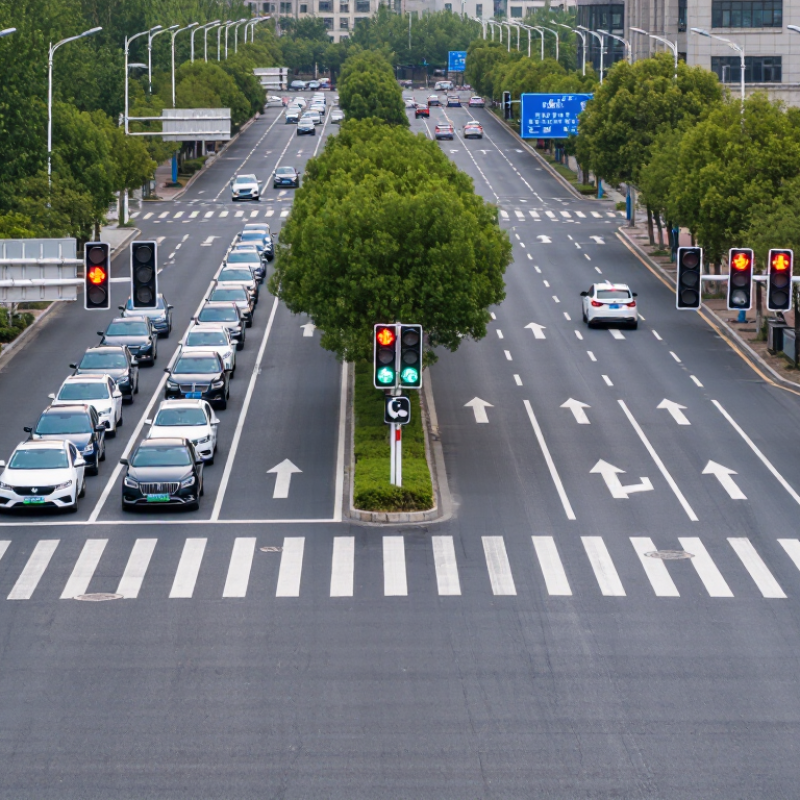
What Are China Best Urban Traffic Light Safety Standards?

Time:2026-09-18 Author:Madeline
0%

Urban traffic lights are not merely colored lamps on steel poles. They form a safety system involving signal design, electrical protection, visibility, timing, maintenance, and pedestrian movement. In China, professional projects commonly reference national standards such as GB 14886 for road traffic signal settings and GB 14887 for traffic signal equipment. These standards help engineers assess placement, signal phases, housing quality, power reliability, and compatibility with local road conditions. Still, a compliant design can perform poorly if visibility is blocked by trees, signs, buses, or heavy rain.

So, what are the safety standards for urban traffic light installation? The answer includes more than one checklist. Engineers should verify pole strength, grounding, cable insulation, waterproof enclosures, controller protection, and clear sight distance. Signal heads should remain visible from a practical stopping position. Pedestrian signals need suitable height, crossing time, tactile guidance, and accessible controls where required. Intersections also need careful coordination, especially near schools, hospitals, bus stations, and crowded commercial streets.

Small details matter. A loose cable cover can admit water. A faded lens can confuse drivers. Timing should reflect real traffic, not only computer models. Field testing during daylight, nighttime, rain, and peak congestion improves reliability. Yet no standard removes every risk. Local road behavior, construction changes, and maintenance delays can expose weaknesses. Therefore, the best urban traffic light safety standards in China should be applied as a living engineering process, supported by inspection records, public feedback, and continuous improvement. Safety is never finished.

What Are China Best Urban Traffic Light Safety Standards?

Definition and Purpose of Urban Traffic Light Safety Standards in China

China’s urban traffic light safety standards define how signals should be designed, installed, operated, and maintained. GB 14886-2016 covers signal installation and technical requirements. GB 5768.3-2009 addresses traffic signal signs and road markings. Together, they aim to create predictable movements for drivers, cyclists, and pedestrians at busy junctions. The purpose is practical: reduce conflicts, improve crossing visibility, and give emergency movements clearer priority.

The need is growing. China’s Ministry of Public Security reported about 435 million registered motor vehicles in 2023. More vehicles create heavier turning flows and longer pedestrian exposure. The World Health Organization’s Global Status Report on Road Safety 2023 estimates 1.19 million annual road deaths worldwide. This figure shows why signal safety cannot depend only on driver attention. A safe intersection needs visible signal heads, suitable installation heights, protected pedestrian phases, and timing based on real traffic conditions.

Field experience also reveals limits. A technically compliant signal may still confuse people during rain, night work, or unusual congestion. Local authorities should check sight distance, queue length, elderly walking speed, and accessible crossing needs. Timing plans need regular review, not just one approval. This is where the standards can feel incomplete. Human behavior changes faster than paperwork. Better practice combines national requirements, traffic surveys, conflict observations, and maintenance records. Even small details matter, such as removing branches that hide a red signal or repainting worn stop lines.

Core Design Requirements for Safe Traffic Signal Systems

China’s urban traffic signal safety starts with disciplined design, not faster signal changes. GB 14886-2016 defines requirements for signal placement, control, and supporting equipment. GB 5768.3-2009 guides traffic signal displays and road markings. Engineers should verify sight distance, installation height, lantern visibility, and conflicts at every approach. A signal must remain readable through rain, glare, dust, and nighttime reflections.

Conflict-free phasing is essential. Separate pedestrian movements from turning traffic where risks are high. Provide adequate crossing time for older adults and mobility-impaired users.

The World Health Organization’s Global Status Report on Road Safety 2023 records about 1.19 million annual road deaths worldwide. It also reports that more than half involve vulnerable road users. That evidence supports longer pedestrian clearance intervals, visible countdown displays, and accessible audible or tactile warnings. Small details matter.

Signal controllers should detect lamp faults and enter a safe operating mode. Backup power can prevent dark intersections during short outages. However, backup systems need regular testing. Field inspections should measure actual driver compliance, queue spillback, nighttime visibility, and pedestrian delay. The Federal Highway Administration’s traffic signal guidance emphasizes detection, timing, maintenance, and documented performance review. Data from one week is not enough. Weather and holiday traffic can distort conclusions. Engineers should reassess timing after crashes, road changes, or repeated public complaints. No design is perfect. Safety improves through evidence, correction, and honest review.

Technical Standards for Signal Visibility, Timing, and Coordination

Safe urban traffic signals in China depend on visible displays, predictable timing, and coordinated operation. Signal heads should remain clear against bright skies, rain, dust, and nighttime glare. Engineers check lens brightness, color recognition, contrast, mounting height, and viewing angles during field inspections. Trees, signs, and roadside lighting can hide a signal. Small obstructions matter.

Timing must match real road conditions. Engineers measure approach speed, lane width, pedestrian crossing distance, queue length, and turning movements before setting each phase. Yellow intervals should provide a clear decision period, while all-red intervals should allow vehicles to leave the conflict area. Pedestrian signals need enough time for children, older adults, and people with mobility limitations. Countdown displays can improve understanding, but they should not replace safe phase calculations. Timing should be reviewed after construction, seasonal traffic changes, or repeated near-miss reports.

Coordination links nearby intersections through cycle lengths, offsets, and phase plans. A well-timed corridor can reduce abrupt stopping and prevent queues from blocking upstream crossings. However, coordination is not automatically safer. Bus stops, schools, markets, and emergency access can disturb a mathematical plan. Traffic teams should compare detector data with on-site observations, then adjust carefully. Perfect timing is rare. Human behavior remains difficult to model. Night audits and maintenance logs often reveal failures that daytime testing misses. A dark module or delayed change deserves immediate attention.

China Urban Traffic Signal Safety Standards

Reference yellow-interval values calculated for level urban approaches

Yellow intervals increase with approach speed to give drivers time to perceive the change and clear the conflict area. The reference values use a 1-second perception-reaction time and a 3 m/s² comfortable deceleration rate, rounded up to whole seconds. Signal heads should also remain clearly visible on the approach, with a practical engineering visibility check of at least 100 m where site conditions permit. Coordinated signals should use consistent cycle lengths and offsets to support stable progression, while final values must be verified against applicable Chinese standards and local traffic conditions.

Pedestrian, Bicycle, and Vulnerable Road User Safety Measures

What Are China’s Best Urban Traffic Light Safety Standards?

Pedestrian, Bicycle, and Vulnerable Road User Safety Measures

China’s best urban traffic light safety standards should be judged by people outside cars. Pedestrians, cyclists, children, older adults, and people with disabilities need predictable movements. At busy junctions, signal plans should separate turning vehicles from crossing users. A short all-red interval can clear the conflict area. Clear countdown displays help people decide whether to cross or wait.

Wait.

Practical audits should measure crossing width, walking speed, sight distance, and nighttime visibility. Engineers should check signal heads from a wheelchair user’s eye level, not only from a driver’s seat. Audible signals and tactile paving can support people with limited sight, but poor placement creates confusion. Bicycle crossings need visible stop lines, sufficient green time, and protection from turning traffic. Where cycle paths meet sidewalks, markings should explain who yields. Small details matter.

Reliable programs combine applicable national requirements, local traffic data, and regular maintenance records. Field teams should review near misses, blocked crossings, faded markings, and signal failures after construction. Qualified safety engineers can then adjust signal phases instead of relying on assumptions. No timing plan is perfect. Rain, school dismissal, and delivery activity can change risk quickly. A weakness remains common: agencies may optimize vehicle flow before vulnerable-user comfort. That choice deserves open review, public feedback, and measured correction. The best standard is not merely a compliant signal. It is a junction where a nervous child can cross without guessing.

What Are China Best Urban Traffic Light Safety Standards? - Pedestrian, Bicycle, and Vulnerable Road User Safety Measures

Safety Dimension Chinese Standard or Reference Key Requirement or Benchmark Primary Users Protected Recommended Safety Check
Traffic signal arrangement GB 14886-2016, Specifications for Setting of Road Traffic Signals Signal phases should be selected according to traffic flow, intersection geometry, conflict points, road function, and pedestrian crossing demand. Signal heads must be clearly visible from the approach and positioned consistently with the stop line. All road users, especially pedestrians and cyclists at conflict points Check visibility, head alignment, obstruction, nighttime visibility, and whether each permitted movement has a clear signal indication.
Pedestrian signal control GB 14886-2016 Pedestrian signals should provide distinct stop and walk indications. Where a crossing is divided by a median or refuge island, signal operation should make each crossing stage understandable and safe. Pedestrians, children, older adults, and people with disabilities Verify that the walking indication is visible from the waiting area and that the clearance interval allows users already in the crossing to reach a safe refuge or the opposite sidewalk.
Pedestrian crossing markings GB 5768.3-2009, Road Traffic Markings Zebra crossings, stop lines, lane arrows, and other markings should be continuous, legible, correctly positioned, and maintained with adequate retroreflectivity. Pedestrians and approaching drivers Inspect daytime contrast, nighttime retroreflectivity, skid resistance, fading, and the distance between the stop line and the crossing.
Traffic signs and warning information GB 5768.2-2022, Road Traffic Signs Signs for pedestrian crossings, non-motorized vehicles, speed control, lane use, and hazards should use standardized shapes, colors, symbols, placement, and retroreflective performance. Drivers, pedestrians, cyclists, and other vulnerable road users Check sign recognition distance, obstruction by trees or street furniture, retroreflectivity, and consistency with the road markings and signal operation.
Accessible pedestrian route GB 55019-2021, General Code for Accessibility of Buildings and Civil Engineering; GB 50763-2012 An accessible route should be continuous, unobstructed, and connected to crossings, transit stops, entrances, and refuge areas. A commonly specified accessible walkway width is at least 1.50 m; constrained locations may require special design treatment. Wheelchair users, people with visual impairments, older adults, and people pushing strollers Measure clear width, check surface evenness, remove utility poles and parked vehicles, and confirm continuity through the entire intersection.
Curb ramps and tactile paving GB 50763-2012; GB 55019-2021 Curb ramps should connect sidewalks to crossings without abrupt level changes. A typical accessible-design benchmark is a ramp slope no steeper than 1:12, subject to the applicable project and site conditions. Tactile warning and guidance surfaces should be continuous and correctly oriented. Wheelchair users and people with visual impairments Check ramp slope, landing space, drainage, tactile-paving alignment, edge protection, and whether tactile surfaces lead to the correct crossing point.
Bicycle and non-motorized vehicle separation GB 14886-2016; CJJ 37-2012, Code for Design of Urban Road Engineering Where bicycle traffic is significant, intersection design should clearly define non-motorized vehicle routes, waiting areas, crossing paths, and conflict points. Signal phasing and markings should prevent ambiguous interactions with turning motor vehicles. Cyclists, electric-bicycle riders, and pedestrians Check whether bicycle routes are continuous, whether turning vehicles yield at crossings, and whether waiting areas prevent bicycles from blocking pedestrian paths.
Right-turn and left-turn conflict management GB 14886-2016; CJJ 37-2012 Signal timing, channelization, stop lines, corner geometry, and visibility should be coordinated to reduce conflicts between turning vehicles and pedestrians or cyclists crossing the side road. Pedestrians and cyclists crossing at signalized intersections Record turning speeds, driver yielding behavior, blocked sight lines, near misses, and vehicle encroachment into the crossing.
Pedestrian refuge and median islands CJJ 37-2012; GB 55019-2021 Long or wide crossings should consider staged crossing, refuge space, protective separation, and accessible connections. Refuge areas must not be blocked by signs, poles, railings, or drainage structures. Older adults, children, people with disabilities, and slow-moving pedestrians Check usable refuge width, protection from traffic, lighting, drainage, tactile guidance, and the visibility of people waiting on the island.
Lighting and nighttime visibility CJJ 45-2015, Standard for Lighting Design of Urban Roads; GB 14886-2016 Crossings, stop lines, signal heads, sign faces, sidewalks, and bicycle routes should remain identifiable at night without excessive glare or dark zones. All users, particularly pedestrians and cyclists at night Inspect illumination uniformity, glare, shadow areas, signal visibility, sign retroreflection, and visibility of people waiting at the curb.
Speed environment near crossings GB 5768.2-2022; CJJ 37-2012; local urban-road traffic-management rules Posted speed limits, advance warnings, lane layout, road geometry, and signal timing should be consistent with the crossing risk. Lower operating speeds are particularly important where pedestrian and bicycle movements are concentrated. Pedestrians, cyclists, children, and people with limited mobility Measure actual vehicle speeds, braking behavior, compliance with the stop line, and speed differences between lanes.
Signal controller reliability GB 14886-2016; applicable urban traffic-signal equipment and electrical-safety requirements Controllers should maintain coordinated phase sequences, avoid conflicting indications, support safe failure behavior, and allow regular inspection and maintenance. All intersection users Test lamp failure, power interruption, communication loss, detector faults, conflicting greens, restart behavior, and emergency operating procedures.
Maintenance and performance monitoring GB 14886-2016; GB 5768.2-2022; GB 5768.3-2009 Safety depends on continuing maintenance of signal lamps, controllers, signs, markings, tactile paving, curb ramps, lighting, and roadside visibility. Local authorities should use collision and conflict data to update timing and layout. All vulnerable road users Track signal faults, marking condition, obstruction complaints, crashes, near misses, pedestrian delay, and accessibility defects.

Note: Chinese national standards provide the technical framework, while municipal planning documents and project-specific traffic studies may set additional requirements for signal timing, road geometry, accessibility, bicycle facilities, and maintenance.

Inspection, Maintenance, and Compliance of Urban Traffic Lights

China’s urban traffic light safety depends on disciplined inspection, maintenance, and compliance. National requirements guide equipment design, while local road authorities may add operational rules. A reliable inspection begins with the signal head, lenses, poles, cables, controller cabinet, and pedestrian buttons. Technicians should check visibility during daylight, darkness, rain, and heavy traffic. Small faults matter.

Maintenance teams should test red, yellow, and green timing against approved traffic plans. They should also examine cabinet temperature, grounding, backup power, and communication connections. After storms, collisions, or road construction, an additional inspection is sensible. Keep it practical. Dust on a lens can reduce visibility, while loose wiring may create intermittent failure that a quick check misses.

Compliance requires trained personnel, controlled work zones, accurate maintenance records, and clear approval procedures before timing changes. Each record should show the inspection date, fault description, corrective action, and responsible technician. In field work, paperwork is sometimes completed after repairs, which weakens traceability. That habit needs improvement. Independent checks can confirm whether repairs restored safe operation, rather than merely switching the signal back on. Authorities should review recurring faults, pedestrian complaints, and emergency callouts to identify deeper equipment or design problems. A checklist helps, but it cannot replace professional judgment at complex intersections.

FAQS

What is the purpose of urban traffic light safety standards in China?

They guide signal design, installation, operation, and maintenance. Their goal is predictable movement and fewer conflicts.

Which road users should traffic signals protect?

Signals should support drivers, cyclists, pedestrians, and emergency movements. Pedestrian visibility remains especially important at busy junctions.

Why are traffic light safety measures increasingly necessary?

More vehicles create heavier turning flows and longer pedestrian exposure. Driver attention alone cannot ensure safety.

What should authorities check when installing traffic signals?

They should check signal height, sight distance, crossing visibility, and pedestrian timing. Elderly walking speeds also deserve attention.

Can a compliant traffic signal still confuse people?

Yes. Rain, darkness, roadworks, and unusual congestion can reduce clarity. Compliance does not guarantee perfect human understanding.

What equipment should technicians inspect?

They should examine signal lenses, poles, cables, controller cabinets, and pedestrian buttons. Dust can hide a signal’s color.

When should extra traffic light inspections occur?

Additional checks are sensible after storms, collisions, or road construction. These events can damage wiring or change visibility.

What records should maintenance teams keep?

Each record should show the inspection date, fault, repair, and responsible technician. Clear records support traceability.

How can authorities improve traffic signal reliability?

They should test timing, backup power, grounding, and communication connections. Recurring faults and pedestrian complaints need regular review.

What are the limitations of a simple inspection checklist?

A checklist can miss complex design problems. Professional judgment and independent repair checks still matter. More reflection is needed.

Conclusion

China’s urban traffic light safety standards define how signal systems should be designed, installed, operated, and maintained to improve road safety and traffic efficiency. What are the safety standards for urban traffic light installation? They generally focus on clear signal placement, stable structures, reliable electrical protection, suitable height and spacing, and unobstructed visibility for drivers and pedestrians. Signal colors, symbols, brightness, and timing should remain recognizable in different weather and lighting conditions, while coordinated control can reduce confusion and improve traffic flow at connected intersections.

These standards also emphasize the protection of pedestrians, cyclists, children, older people, and other vulnerable road users. Features such as pedestrian countdown displays, accessible crossing signals, adequate crossing time, bicycle-friendly arrangements, and safe refuge areas can help reduce conflicts. Regular inspections should check signal timing, lenses, wiring, controllers, poles, and backup systems. Prompt maintenance, documented testing, and compliance reviews are essential to ensure that urban traffic lights remain dependable, visible, and effective throughout their service life.

Madeline

Madeline

Madeline is a dedicated marketing professional with a wealth of expertise in our company's core offerings. With a keen understanding of the industry, she brings a unique perspective to her role, consistently delivering high-quality content that highlights the superior aspects of our products. As......