Choosing fog lights for a China-market vehicle starts with a practical question: how does color temperature affect visibility in foggy weather? On a damp road, cool-white beams can make lane markings and signs look crisp, yet reflected light may create a bright veil in dense fog. Warmer light, often around 3000K, can feel less harsh and may improve contrast for some drivers. The result varies. Fog density, lamp height, beam shape, lens condition, and brightness all matter.
Lighting researcher Dr. John Bullough’s work is relevant to this decision. A careful paraphrase of the broader lighting principle is: “Color temperature is only one part of visibility; beam pattern and glare control matter too.” That distinction helps when comparing top fog lights from Chinese manufacturers. Check for a low, wide beam with a sharp upper cutoff, consistent output, and sound thermal design—not just a Kelvin number on the box. A useful test is simple: inspect the beam on a misty, closed course, and note whether nearby road edges remain visible without a bright hotspot. Never rely on color alone.
There is no perfect setting. Some drivers may prefer amber in heavy mist; others may find neutral white clearer in light rain or haze. That preference deserves a real-world check. Product claims can be tidy, while weather is not. Look for transparent specifications and repeatable testing before choosing a fog light.
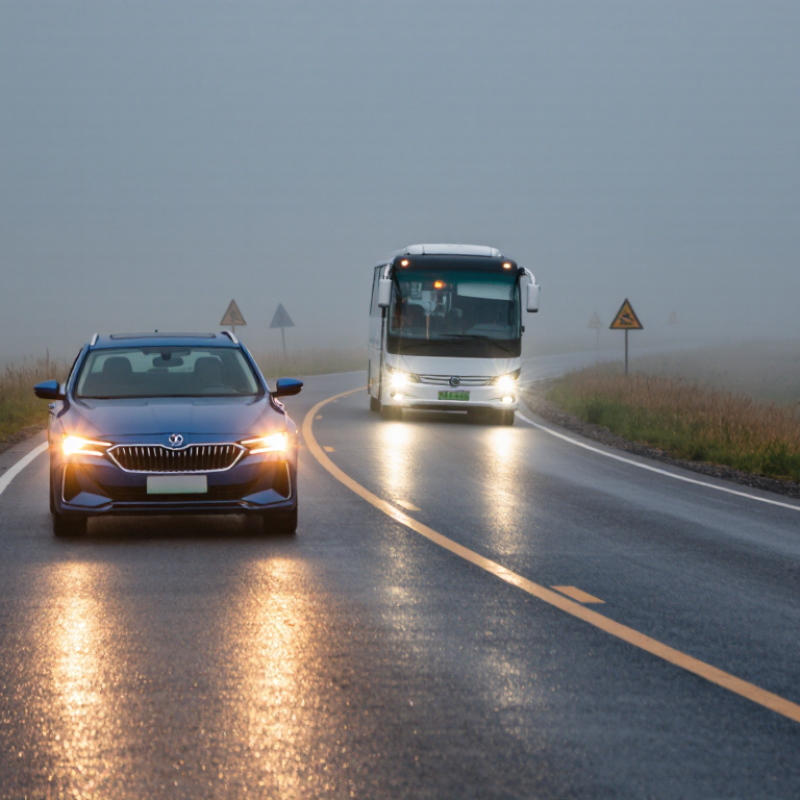
Fog lights are mounted low and aimed to spread light across the road near the vehicle. Their wide, controlled beam can help reveal lane edges, road markings, and nearby hazards without lighting up the fog directly ahead. That matters because bright light reflected by water droplets can create a white glare curtain. Fog lamps do not make it safe to maintain normal speed.
The Federal Highway Administration reports that fog is associated with about 38,000 crashes and 600 deaths each year in the United States. These figures show why visibility deserves careful attention, though they do not mean fog lights alone prevent crashes. In real driving, even a familiar road can become difficult when mist thickens around a bend. A warmer color temperature may feel easier on the eyes in some conditions, but beam pattern, clean lenses, and sensible speed matter more than color alone. The evidence is not a promise of better visibility for every driver.
Tips: Use fog lights only when visibility is poor, and switch to low beams if glare worsens. Slow down. Leave extra following distance, keep the windshield clear, and avoid relying on a brighter bulb to see through dense fog.
For China top fog lights, color temperature is measured in kelvins (K). It describes how light appears, not how bright it is. The U.S. Department of Energy’s solid-state lighting guidance places warm white around 2700–3000 K and daylight white around 5000–6500 K. A fog lamp near 3000 K therefore looks warmer and more amber than a high-Kelvin white lamp. CIE’s International Lighting Vocabulary also distinguishes color appearance from other lighting properties. Kelvin alone cannot tell you how well a lamp reveals road edges.
In mist, rain, or wet snow, a warm-looking beam may feel less harsh to some drivers. But visibility also depends on beam shape, output, lens condition, and correct aiming. A poorly aimed lamp can create glare, even at a lower color temperature. That matters. There is no single Kelvin figure that guarantees better performance in every weather condition. I would treat color temperature as one selection factor, not a shortcut to judging quality.
Tips: Compare lamps in the same dim conditions, on a wet road if possible. Check the beam’s low, wide spread and sharp cutoff. A practical warm-white option can be easier on the eyes, but personal impressions vary. I’d verify the actual beam before deciding.
Yellow and white fog lights solve different visibility problems. Warm yellow light, often near 3,000 K, can feel easier to read in mist, rain, or snow. It gives road edges and lane markings a softer appearance, especially when the air looks dense with moisture. The difference is not magic. A poorly aimed yellow beam can still glare off wet pavement and hide detail.
White light, commonly around 5,000–6,000 K, reveals colors and roadside objects clearly in clear weather. In thick fog, however, its brighter, cooler appearance may make reflected haze more noticeable to some drivers. Conditions vary, and color temperature alone cannot predict performance. Beam shape, mounting height, lens clarity, and careful aiming matter just as much. Check the lights from the driver’s seat on a damp, quiet road; a bright spot directly ahead is a warning sign. I once assumed whiter meant safer, but that was too simple. Try both only where practical, and judge what helps you see the road without lighting up the fog.
Yellow and white fog lights perform differently depending on conditions, but color temperature alone does not determine visibility.
How to read this chart: These are approximate color-temperature references, not performance ratings. Yellowish light may feel less glaring in some conditions, while white light can appear brighter. In fog, beam pattern, aim, and output are also important; neither color is universally better.
Fog does not always call for the brightest-looking light. Color temperature changes how the beam appears, but beam shape, output, and lens condition matter just as much. A well-aimed fog lamp can illuminate the road edge without throwing a bright wall of glare back at the driver.
Around 3000K produces a warm, yellowish light. Some drivers find it easier on the eyes in mist, rain, or snow, especially when road markings are faint. It is not a cure for dense fog. Aiming still matters. Neutral white light, roughly 4000K to 5000K, can offer a more natural view in mixed conditions. Very cool, bluish light may look crisp on a dry road, yet scattered moisture can make it feel harsher. Results vary with the lamp and weather.
Choose for the routes you actually drive. If coastal fog is common, compare a warm beam on a damp evening; if conditions are usually clear, neutral white may feel more natural. Check the vehicle manual and keep the lenses clean. I would avoid judging by color alone. On one wet road, a warmer setting seemed calmer, but the beam pattern made the bigger difference. That detail is easy to miss.
When sourcing fog lights from Chinese manufacturers, define the driving conditions before choosing a color temperature. Warm light around 3000K can look less harsh in mist or wet weather, while neutral white may suit mixed conditions. Kelvin is only one clue. Beam shape and cutoff matter too; a poorly aimed lamp can create glare, whatever its color.
Ask suppliers for measured beam data, not just bright product photos. Request sample units and check the beam on a wet road or against a wall at a fixed distance. Small details matter. Compare housing materials, sealing design, connector fit, and heat management. These affect durability after repeated rain, vibration, and long night drives. Ask how production batches are checked, and request test records relevant to your target market.
A clear specification helps avoid mismatched samples and bulk orders. Confirm the color-temperature tolerance, power draw, mounting dimensions, packaging, lead time, and minimum order quantity in writing. Ask whether the factory can keep those details consistent across repeat orders. Not just Kelvin. I would still leave room for a physical test; a neat datasheet cannot show every real-road reflection or installation issue.
Mounted low, they spread a wide beam near the road. This can reveal lane edges, markings, and nearby hazards. Not magic.
Use them when visibility is poor, and follow your vehicle manual. If glare worsens, switch to low beams.
Water droplets can reflect bright light toward you, creating a white glare curtain. More brightness is not always better.
Around 3000K looks warm, and some drivers find it easier on their eyes in mist, rain, or snow. Results vary.
Neutral white light, roughly 4000K to 5000K, may look natural in mixed conditions. The beam pattern matters more than color alone.
No. Lamp design, aiming, weather, and clean lenses all affect what you can see. I would not judge by color alone.
Slow down, leave extra following distance, and keep the windshield clear. Fog lights do not make normal speed safe.
No light can promise that. A U.S. highway agency reports about 38,000 fog-related crashes and 600 deaths each year. Those figures do not show that fog lights alone prevent crashes.
Fog lights are designed to illuminate the road close to the vehicle when fog, rain, or snow reduces visibility. Color temperature, measured in Kelvin, describes whether light appears warmer and more yellow or cooler and more white. When considering how does color temperature affect visibility in foggy weather, the key point is that light interacting with moisture can create glare and make it harder to see. Yellow light may feel more comfortable in dense fog or heavy precipitation, while white light can provide a brighter, clearer appearance in less severe conditions.
The best choice depends on your usual driving environment, the fog lamp’s beam pattern, brightness, durability, and compatibility with your vehicle. Rather than choosing by color alone, consider how the lights perform on wet roads and whether they illuminate the area near the vehicle without distracting glare. When comparing options from Chinese manufacturers, review product specifications, construction quality, and testing information to find lights suited to your needs.

OneAll Lights