How Do Dusk to Dawn Sensors Work in Solar Street Lights?

Time:2026-10-08 Author:Liam
0%

Solar street lights appear simple: a panel charges a battery, and a lamp glows after sunset. The control decision is more interesting. If you ask, “how do dusk to dawn sensors work in solar street lights,” the answer begins with light detection, not the battery. A photodiode, photoresistor, or integrated photovoltaic sensor measures surrounding brightness. When daylight falls below a programmed threshold, the controller activates the LED driver. At sunrise, the sensor signals the controller to switch the lamp off.

This small process supports a much larger energy transition. The International Energy Agency’s Renewables 2024 report recorded about 510 gigawatts of new renewable power capacity in 2023. Solar photovoltaic systems represented roughly three-quarters of those additions. Solar lighting benefits from the same cost and efficiency improvements, but outdoor reliability depends on careful control. The sensor must avoid false switching from headlights, lightning, dust, or bright reflections. Controllers therefore use time delays, hysteresis, and sometimes scheduled dimming. A practical example is a lamp that runs at full output near a gate, then dims after midnight to protect battery capacity.

The sensor is only one part of the system. Battery temperature, panel shading, wiring losses, and LED efficiency also affect nighttime performance. The U.S. Department of Energy’s solid-state lighting research consistently emphasizes system-level efficiency, not merely lamp brightness. That distinction matters. A sensor may work correctly, yet the street light can still fail before dawn. Field testing remains essential, especially during cloudy weeks. This article examines the sensing principle, control logic, common faults, and design choices behind dependable dusk-to-dawn solar illumination. Some installations remain imperfect. Good engineering acknowledges that.
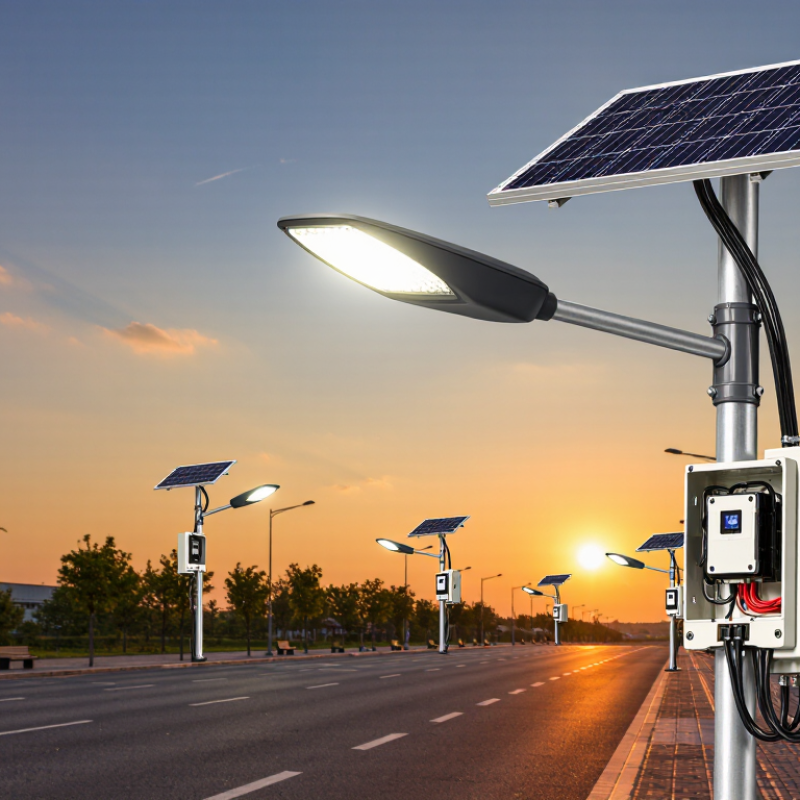
How Do Dusk to Dawn Sensors Work in Solar Street Lights?

What a Dusk-to-Dawn Sensor Is in a Solar Street Light

How Do Dusk to Dawn Sensors Work in Solar Street Lights?

A dusk-to-dawn sensor is the light-sensing part of a solar street light. It detects changes in surrounding brightness and tells the controller when to switch the lamp on or off. During daylight, the solar panel produces voltage and the controller keeps the light off. After sunset, panel voltage drops, and the sensor signals that nighttime operation can begin.

Many systems use a photocell, photodiode, or the solar panel itself as the light reference. The controller compares the measured light level with a preset threshold. A short delay prevents headlights, passing shadows, or sudden clouds from triggering the lamp. At dawn, rising light levels usually stop the output and allow charging to continue. It is simple. But it is not perfect.

Tips: Keep the sensor clear of dust, leaves, and nearby light sources. During installation, avoid placing it under roof edges or beside bright signs. Test the light after sunset and before sunrise, not only during the afternoon. In practical maintenance, a sensor that switches too early may need a lower sensitivity setting or a longer delay. A sensor can still misread unusual weather, so checking seasonal performance is worthwhile.

How the Sensor Detects Changes in Ambient Light

How Do Dusk to Dawn Sensors Work in Solar Street Lights?

A dusk-to-dawn sensor measures the light around a solar street light. Most systems use a photoresistor or photodiode. Its electrical response changes as daylight increases or decreases. During the afternoon, sunlight produces a strong signal. The controller reads this signal and keeps the lamp switched off.

At dusk, the sensor detects falling ambient light levels. The controller compares the reading with a preset threshold. When darkness remains below that threshold, the light turns on. Many controllers add a short delay. This prevents brief shadows, passing clouds, or vehicle headlights from triggering the lamp. The sensor does not measure time directly. It responds to the brightness near the fixture.

At dawn, the process reverses. Rising light produces a different electrical reading, and the controller turns the lamp off. A small gap between the on and off thresholds is useful. It reduces rapid switching near sunrise and sunset. In field inspections, sensor placement often causes more trouble than the circuit itself. A sensor facing a nearby wall may read reflected light. Dust, insects, and water stains can also weaken accuracy. No sensor is perfect. A street light may remain on slightly longer than expected, especially during storms. Installers should check the mounting angle and test readings across several evenings. That practical step can reveal errors that specifications miss.

How Solar Street Lights Switch Between Day and Night Modes

Adusk-to-dawn sensor controls when a solar street light changes operating modes. During daylight, a photodiode measures ambient brightness near the fixture. Strong sunlight tells the controller to stop the lamp and charge the battery. As evening arrives, measured lux falls below a programmed threshold. The controller then activates the LED, often after a short delay. That delay prevents brief shadows from triggering the light too early. At dawn, rising brightness crosses the threshold again, and the lamp switches off.

The transition is managed by a small control circuit, not the solar panel alone. It compares sensor readings with preset values and protects battery energy overnight. Many systems use dimming schedules, motion detection, or both. For example, the lamp may run at 30 percent power before movement raises output. This reduces consumption while maintaining useful visibility on empty roads. Installation experience shows that sensor placement matters. A nearby wall, tree, or reflective sign can confuse the reading. In some locations, dust also changes performance. I have found that simple systems are easier to test, although they offer fewer adjustments.

Tips: Mount the sensor where it sees open sky, away from the LED’s direct glow. Check the actual switch time across several evenings, not one night. Adjust the threshold if clouds cause repeated cycling. Keep the lens clean and inspect wiring after severe weather. Do not assume a larger battery fixes every problem; poor calibration may be the real cause. A manual test can reveal faults, but it should not replace safe electrical inspection.

How the Sensor Coordinates with the Battery and LED Fixture

How Do Dusk to Dawn Sensors Work in Solar Street Lights?

How the Sensor Coordinates with the Battery and LED Fixture

A dusk-to-dawn sensor measures ambient light near the fixture. Its photodiode detects falling sunlight and sends a signal to the charge controller. The controller then checks battery voltage, temperature, and programmed lighting hours. If conditions are safe, it activates the LED fixture. At sunrise, the sensor sends the opposite command and stops illumination. This prevents unnecessary battery drain during bright mornings. A small delay also avoids false switching from passing headlights or clouds.

The battery and LED must operate as one system. When the battery is full, the controller can provide the planned LED output. When voltage drops, it may reduce brightness or shorten operating time. This protects battery life and preserves light for later hours. The U.S. Department of Energy reports that LED lighting uses at least 75% less energy than incandescent lighting and can last up to 25 times longer. That efficiency gives solar systems more usable nighttime coverage. Still, poor settings can waste energy. The design is not foolproof.

Tips: Mount the sensor away from direct LED glare. Check the battery’s low-voltage cutoff during commissioning. Use dimming schedules, such as full output in the evening and reduced output after midnight. NREL’s 2023 photovoltaic and storage maintenance guidance also highlights temperature control, clean modules, and regular electrical inspections. These details matter more than a sensor’s label.

Factors That Influence Sensor Accuracy and Performance

How Do Dusk to Dawn Sensors Work in Solar Street Lights?

Dusk-to-dawn sensors measure surrounding brightness and control the street light automatically. Most systems use a light-dependent resistor or a digital photosensor. When outdoor light drops below a set lux level, the controller activates the lamp. At sunrise, increasing light signals the controller to switch it off. The sensor does not measure time directly.

Sensor placement strongly affects accuracy. A nearby lamp can shine back onto the sensor and cause repeated switching. Walls, tree branches, reflective signs, and roof overhangs can create false shade. The sensor should face open sky, away from the LED fixture. Dust and moisture on its cover also reduce the light reaching the sensing element. Small details matter.

Weather adds another variable. Thick clouds may trigger the light during daytime, while snow can reflect unusual brightness. Seasonal changes also alter sunrise and sunset conditions. A calibrated lux meter helps installers verify the actual threshold instead of trusting assumptions. Many systems use a short delay or hysteresis to prevent rapid on-off cycling. Temperature can affect battery voltage and sensor readings, especially in poorly ventilated enclosures.

Field checks often reveal problems that look like sensor failure. One light may activate early because a nearby window reflects sunlight. Another may stay on because dirt covers the sensor. I prefer testing at several times of day, although this method takes patience. A fixed threshold is not always ideal. Local weather, surrounding lighting, and maintenance routines should influence the final setting.

How Do Dusk to Dawn Sensors Work in Solar Street Lights?

Factors That Influence Sensor Accuracy and Performance

How it works
A photoelectric sensor measures ambient illuminance in lux. When light falls below the controller’s threshold, commonly around 10–30 lux, the street light is switched on.
Accuracy factors
Sensor angle, dirt, shade, nearby reflections, artificial light, cloud cover, and seasonal changes can alter the light level measured by the sensor.
Performance factors
A suitable threshold, adequate solar battery capacity, correct placement, and a short time delay help reduce false switching at dawn and dusk.

Representative outdoor illuminance values shown on a logarithmic scale. Actual readings vary with weather, location, season, sensor installation, and controller settings.

FAQS

What is a dusk-to-dawn sensor in a solar street light?

It detects surrounding brightness and tells the controller when to switch the lamp on or off.

How does the sensor detect sunset?

It measures falling light with a photoresistor, photodiode, or solar panel reference.

What happens when daylight returns?

Rising brightness signals the controller to turn the lamp off and continue battery charging.

Does the sensor measure time directly?

No. It responds to nearby brightness, not a clock or fixed sunset schedule.

Why does the lamp sometimes switch on too early?

Thick clouds, false shade, or a dark wall may make the sensor read nighttime conditions.

How can installation improve sensor accuracy?

Place the sensor under open sky, away from the lamp, roof edges, bright signs, and reflective walls.

What maintenance does the sensor need?

Remove dust, leaves, insects, and water stains from its cover. Small obstructions matter.

Why do controllers use delays or separate light thresholds?

They prevent rapid switching caused by headlights, passing shadows, brief clouds, or changing dawn light.

Can weather affect sensor performance?

Yes. Storms, snow, temperature changes, and seasonal light conditions can produce unusual readings.

How should a sensor be tested?

Check the light after sunset and before sunrise on several evenings. Afternoon testing alone is insufficient.

Conclusion

How do dusk to dawn sensors work in solar street lights? These sensors monitor the level of ambient light around the fixture and respond when daylight changes. During the day, strong sunlight signals the system to keep the LED light switched off while allowing the solar panel to charge the battery. As evening approaches and surrounding light falls below a set threshold, the sensor activates the night mode and turns on the LED fixture. At dawn, increasing sunlight signals the controller to switch the light off and return to charging mode.

The sensor works as part of a coordinated system rather than operating alone. The charge controller manages energy from the solar panel, monitors battery conditions, and helps supply power to the LED throughout the night. Sensor accuracy can be influenced by cloud cover, nearby lamps, dirt, shadows, temperature, and incorrect installation. Proper positioning, suitable sensitivity settings, regular cleaning, and a reliable battery can improve performance and help the solar street light operate consistently from dusk until dawn.

Liam

Liam

Liam is a dedicated marketing professional with a profound expertise in the industry, where he excels at highlighting the unique advantages of our core products. With a keen understanding of market trends and consumer needs, Liam frequently updates our company’s professional blog, providing......