Outdoor LED lamps are often advertised with lifetimes exceeding 50,000 hours. That number needs context. It usually describes lumen maintenance under controlled testing, not every outdoor installation. The real question is: how does temperature affect outdoor led lamp lifespan?
Heat accelerates LED degradation. Higher junction temperatures can reduce light output, weaken phosphor materials, and stress solder connections. A lamp mounted beneath a dark metal canopy may trap heat at noon. Poor airflow makes the problem worse. Cold temperatures usually improve LED efficiency, but repeated freezing and thawing can damage seals, drivers, and connectors.
As LED industry expert Michael Krames has stated, “LEDs are not light bulbs; they are semiconductors.” That distinction matters. Semiconductors require careful thermal control. The U.S. Department of Energy’s Solid-State Lighting reports explain that LED lifetime depends heavily on junction temperature, driver quality, and operating conditions. IES LM-80 testing measures LED lumen maintenance, while TM-21 projects performance from that data. Neither standard guarantees the exact life of a complete outdoor lamp.
ENERGY STAR guidance also stresses thermal management and reliable driver performance. A cooler housing, adequate heat sinking, and correct installation can protect long-term output. Yet field conditions remain messy. Dust, direct sun, high humidity, and voltage variation can change results. Even a 50,000-hour claim may not match the lamp above a hot parking lot. This is where product testing becomes more valuable than marketing language. Some assumptions may still be imperfect, so inspection records and local temperature data deserve attention.
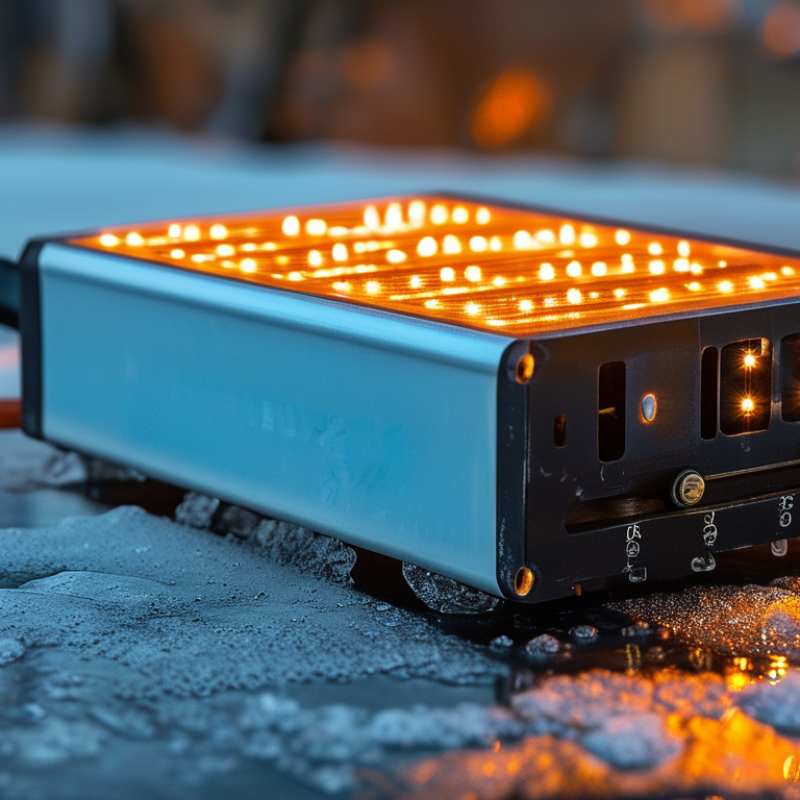
How Temperature Changes Outdoor LED Lamp Performance
How Temperature Changes Outdoor LED Lamp Performance
Temperature changes more than an outdoor LED lamp’s lifespan. It affects brightness, color stability, startup time, and power use. During hot afternoons, heat builds inside the housing and raises the LED junction temperature. The lamp may appear normal, but its light output can slowly decline. Internal drivers also work harder, especially when airflow is blocked by dust, leaves, or a tight mounting surface.
Cold weather behaves differently. LEDs often operate efficiently in low temperatures, yet batteries, seals, and wiring can become less flexible. A lamp may start slowly or produce uneven brightness. Condensation creates another problem. When warm air enters a cold housing, moisture can collect near the circuit board. Small droplets can cause corrosion over time. It is easy to overlook this.
Practical checks help. Measure the housing temperature after several hours of operation, not immediately after switching on. Compare brightness at midday and after sunset. A shaded, ventilated installation usually performs better than one trapped against a dark wall. Thermal paste, mounting contact, and drainage paths also deserve attention. However, temperature ratings alone do not predict real performance. Installation quality matters. A lamp rated for harsh weather can still age quickly when heat cannot escape. Some field observations may even conflict with laboratory results, so repeated seasonal checks are wiser than one quick inspection.
The Effects of Heat on LED Components and Lifespan
Outdoor LED lamp lifespan is governed by heat at the LED junction, not air temperature alone.
The U.S. Department of Energy’s Solid-State Lighting reports identify thermal management as a major reliability factor. A common engineering estimate suggests that each 10°C rise can roughly double aging stress, although this is not a universal law. A hot aluminum housing, blocked vent, or dark wall can trap heat around the board. The lamp may still shine, but its output declines sooner.
The LED package, driver, solder joints, and optical materials all respond differently to heat. IES LM-80 testing measures lumen maintenance under controlled temperatures, while IES TM-21 projects performance from those results. Many outdoor products claim L70 values near 50,000 hours, meaning output may fall to 70% of initial lumens. That figure depends on tested temperature and operating conditions. It is not a promise for every installation.
DOE field evaluations have also shown that real fixtures can perform differently from laboratory expectations, especially when airflow is poor. In practice, I check the mounting surface, driver temperature, and nighttime ventilation, not only the advertised wattage. A cooler fixture usually ages more slowly. Still, a 10°C rule can oversimplify complex failures. Moisture, voltage variation, and repeated thermal cycling may shorten life even when average temperatures look acceptable.
How Cold Temperatures Influence LED Lamp Operation
Cold weather changes how an outdoor LED lamp starts, runs, and ages. The LED itself often tolerates low temperatures well. Cooler junction temperatures can improve efficiency and slow lumen depreciation. The driver is usually more vulnerable. Its capacitors, sensors, and control circuits may respond slowly below their rated range. At -20°C, a lamp can flicker briefly before reaching stable output. That delay is easy to miss during a daytime inspection.
In practical outdoor inspections, I check the driver housing, cable entry, and mounting surface. Cold contracts metal and plastic parts. Repeated expansion and contraction can loosen seals or stress solder joints. Moisture then enters during a warmer afternoon. Even a sealed enclosure may develop internal condensation if pressure changes sharply. I once focused too much on the LED module and overlooked the driver gasket. The failure was not caused by the diode.
Choose a lamp with a published low-temperature operating range. Check the complete fixture, not only the LED chip. Ask for cold-start test data when the site faces severe winters. Do not judge performance from one short test. A lamp that works at -10°C may struggle after repeated overnight cycling. Clean cable glands and secure mounting points during seasonal inspections. A simple cold-start record can reveal delayed ignition, uneven brightness, or unusual noise. These details often expose weaknesses before permanent damage occurs.
The Role of Thermal Management in Extending Lamp Life
How Does Temperature Affect Outdoor LED Lamp Lifespan?
Temperature is one of the strongest influences on outdoor LED lamp lifespan. The U.S. Department of Energy identifies 50,000 hours as a common L70 target for LED luminaires. L70 means the lamp produces 70% of its initial light output. However, this figure is not a promise under every outdoor condition. Higher LED junction temperatures accelerate lumen depreciation and can shorten driver life.
Thermal management controls this risk. Heat must move from the LED junction, through the circuit board and thermal interface, into the housing. A finned aluminum body helps, but only when airflow remains available. Dust, blocked vents, poor mounting, and direct afternoon sunlight can trap heat. In field inspections, an enclosed lamp may feel noticeably hotter than nearby ambient air. Small design details matter.
IES LM-80 and TM-21 procedures require measured lumen-maintenance data and controlled projections. TM-21 limits long-term extrapolation, often to six times the test duration. That restriction deserves attention. A neat laboratory estimate may look precise, while real streets bring heat waves, moisture, vibration, and dirty surfaces. Designers should check junction temperature, driver ratings, thermal-interface quality, and actual installation clearance. Night temperatures also fluctuate, so average ambient temperature can hide damaging daytime peaks. Better cooling usually costs more, but replacing failed lamps and closing roads costs more. Sometimes, the “long-life” specification needs more skepticism.
How Does Temperature Affect Outdoor LED Lamp Lifespan?
The chart shows the indicative L70 service life of an outdoor LED lamp at different LED junction temperatures. Higher temperature accelerates lumen depreciation and can significantly shorten useful lamp life. Effective heat sinking, ventilation, and thermal interface materials help keep junction temperature lower.
Indicative engineering values based on typical LED thermal-aging behavior and the L70 lifetime concept. Actual results vary with LED package, drive current, enclosure design, ambient temperature, and thermal management quality.
Choosing Temperature-Resistant LEDs for Outdoor Applications
How Does Temperature Affect Outdoor LED Lamp Lifespan?
Choosing temperature-resistant LEDs for outdoor applications requires more than checking the ambient temperature. The LED junction, circuit board, driver, and housing all experience different heat levels. A fixture mounted above dark pavement may face intense radiant heat, even when the air feels moderate. High temperatures accelerate lumen depreciation and can shorten driver life. Cold weather creates different problems. It may stiffen seals, reduce battery performance, and increase thermal shock during startup.
Look for a published operating range, junction-temperature data, and a clear lumen-maintenance rating. A dependable outdoor fixture should also use a heat-conductive housing, protected wiring, and a driver rated for the local climate. In coastal or rainy areas, moisture resistance matters as much as heat resistance. Water entering through a weak seal can cause corrosion after repeated temperature changes. Small details matter.
Installation can change real performance. Leave space around the housing, avoid covering ventilation paths, and do not place the lamp beside equipment that releases heat. In practical inspections, blocked airflow is a common cause of premature failure. Yet temperature ratings are not always comparable between suppliers, so read the testing conditions carefully. A lamp rated for 50°C ambient temperature may still run hotter internally. I would not choose from that number alone. Seasonal monitoring can reveal unexpected dimming, flicker, or housing discoloration before failure becomes obvious.
How Does Temperature Affect Outdoor LED Lamp Lifespan? - Choosing Temperature-Resistant LEDs for Outdoor Applications
| Ambient Operating Temperature |
Relative Thermal Stress |
Typical LED Lumen-Maintenance Planning Range* |
Potential Effect on the Lamp |
Recommended Design Measures |
| Below −20°C |
Low for the LED junction |
50,000–100,000 hours |
LED efficiency generally improves in cold conditions, but starting performance, seals, solder joints, and driver components may become limiting factors. |
Use a driver rated for the minimum temperature, low-temperature capacitors, suitable gaskets, and materials tested for thermal contraction. |
| −20°C to 0°C |
Low |
50,000–100,000 hours |
The LED itself is normally not thermally stressed, although repeated cold starts and condensation can affect electronic reliability. |
Select an outdoor-rated driver and enclosure with moisture control and a verified cold-start specification. |
| 0°C to 25°C |
Low to moderate |
70,000–100,000 hours |
This range is generally favorable for maintaining LED output and controlling heat-related aging. |
Maintain open heat paths, avoid covering ventilation surfaces, and keep the driver within its rated temperature range. |
| 25°C to 40°C |
Moderate |
50,000–80,000 hours |
Higher ambient temperature raises LED junction temperature and can accelerate lumen depreciation, phosphor aging, and driver wear. |
Use a metal heat sink with low thermal resistance, adequate airflow, and thermal-interface materials installed correctly. |
| 40°C to 55°C |
High |
35,000–60,000 hours |
Thermal stress becomes a major lifetime factor. Driver capacitors and other electronic parts may age faster than the LED package. |
Choose a high-temperature-rated driver, reduce LED drive current when possible, increase heat-sink area, and avoid enclosed mounting locations. |
| 55°C to 70°C |
Very high |
20,000–40,000 hours |
Sustained heat can significantly accelerate lumen depreciation, color shift, solder fatigue, seal aging, and driver failure. |
Use LEDs and drivers specifically qualified for high-temperature operation, provide substantial thermal headroom, and consider lower power or active thermal management. |
| Above 70°C |
Extreme |
Usually below 20,000–30,000 hours unless specially engineered |
The LED junction and driver may exceed their rated limits, causing rapid light-output loss, premature electronic failure, or safety-related shutdown. |
Do not rely on standard outdoor lamps without verified thermal data. Recalculate the thermal design, derate the system, improve shading and airflow, or select a purpose-built high-temperature luminaire. |
*The lumen-maintenance figures are typical planning ranges for properly designed outdoor LED luminaires, expressed as approximate time to 70% of initial light output (L70). Actual lifespan depends on LED junction temperature, drive current, driver quality, enclosure design, humidity, cycling, installation orientation, and maintenance. Always verify the manufacturer’s temperature rating and LM-80/TM-21 or equivalent lifetime documentation for the specific luminaire.
FAQS
High junction temperatures accelerate lumen depreciation and shorten driver life. The lamp may still glow, but less brightly. Heat hides.
L70 means the lamp produces 70% of its initial light output. A 50,000-hour target is not guaranteed under every outdoor condition.
Heat travels from the LED junction through the circuit board and thermal interface into the housing. A finned aluminum body helps when airflow remains open.
Blocked vents, dusty surfaces, poor mounting, and direct afternoon sunlight can trap heat. Leave visible space around the housing. Small details matter.
Not completely. A lamp above dark pavement may face intense radiant heat despite moderate air temperature. Daytime peaks can be more damaging than averages.
Cold may stiffen seals, reduce battery performance, and increase thermal shock during startup. Repeated temperature changes can weaken protection over time.
Check the operating range, junction-temperature data, driver rating, and lumen-maintenance results. Read the test conditions carefully. Not always comparable.
Weak seals can allow water inside during repeated heating and cooling. Moisture may cause corrosion in wiring or circuit parts. That risk is easy to underestimate.
Look for dimming, flicker, unusual housing warmth, or discoloration. Seasonal monitoring can expose problems before complete failure. I would not rely on appearance alone.
Conclusion
Outdoor LED lamp performance is closely linked to temperature, which raises the question: how does temperature affect outdoor led lamp lifespan? Excessive heat can accelerate the aging of LED chips, drivers, circuit boards, seals, and other components. It may reduce brightness, change color consistency, increase power stress, and shorten the lamp’s useful life. Poor airflow, direct sunlight, and enclosed housings can make these effects more serious.
Cold temperatures usually do not damage LEDs as quickly as heat, and they may even improve efficiency in some conditions. However, extreme cold can affect driver response, material flexibility, startup performance, and battery operation. Effective thermal management, including heat-dissipating housing designs, suitable ventilation, quality thermal interfaces, and proper installation, helps maintain stable performance. For outdoor applications, selecting LEDs and drivers rated for the expected temperature range, moisture exposure, and seasonal changes is essential for achieving dependable illumination and a longer service life.

 OneAll Lights