Outdoor LED lamps face more than darkness. They endure rain, dust, windblown grit, insects, and sudden temperature changes. A poorly protected lamp may flicker after one storm or collect moisture behind its lens. That failure can create maintenance costs and unsafe dark areas.
So, why is IP65 or IP66 rating important for outdoor led lamps? The IP code offers a practical way to judge protection against solid particles and water. IP65 means the enclosure is dust-tight and protected against water jets. IP66 provides the same dust protection, with stronger resistance to powerful water jets. Neither rating permits continuous underwater use. That detail is often overlooked.
Consider a pathway lamp beside a garden sprinkler. An IP65 model may handle normal spray effectively. A fixture near a coastal walkway may face stronger wind, rain, and salt-bearing moisture. IP66 can provide extra protection during harsh cleaning or storm conditions. Still, the rating alone cannot guarantee long service life. Cable glands, seals, housing materials, and installation quality matter equally. This is where specifications can become confusing.
This guide examines five practical reasons these ratings matter for outdoor LED lighting. It connects laboratory protection levels with real installation situations. It also considers cleaning, seasonal weather, electrical safety, and maintenance planning. A higher rating is not automatically the best choice. The right choice depends on exposure, mounting position, and local conditions. Small details matter. A lamp mounted under an eave has different risks from one installed beside an open driveway. Checking the complete product specification remains essential.
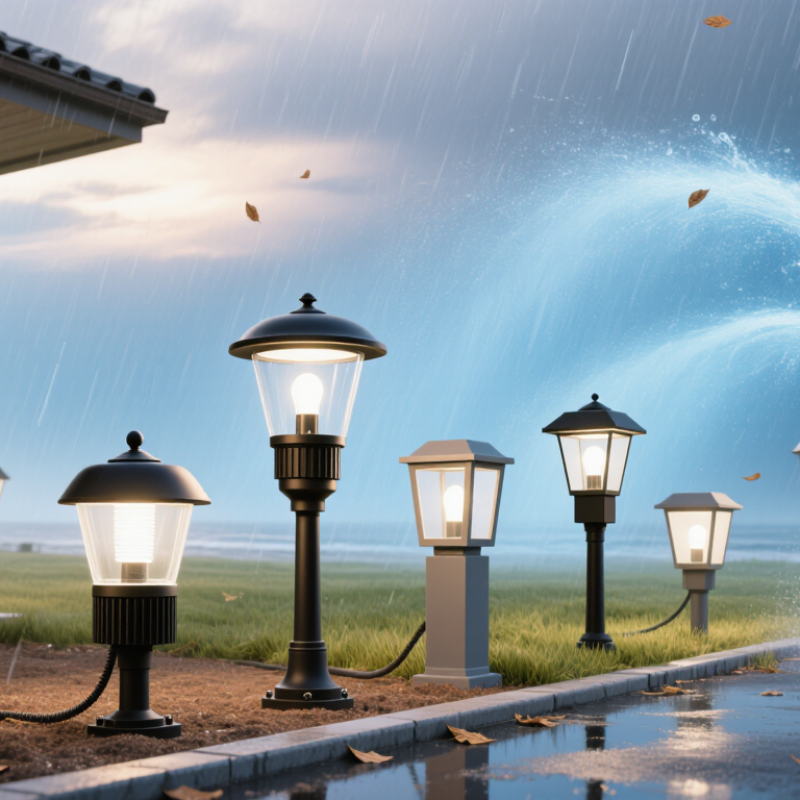
IP ratings follow IEC 60529. The first digit shows protection against solids. A “6” means the enclosure is dust-tight, keeping fine particles away from LEDs, drivers, and terminals. The second digit shows water resistance. “5” withstands water jets, while “6” handles more powerful jets. Neither rating confirms safe immersion.
IP65 suits covered façades and ordinary rain. IP66 is safer near sprinklers, coastal spray, or frequent cleaning.
A sealed housing cannot compensate for an open cable gland or damaged gasket. Small installation mistakes matter.
Dust protection can reduce contamination, but heat still shortens driver life. Leave airflow around the lamp.
The U.S. Department of Energy reports that LED lighting can use at least 75% less energy and last up to 25 times longer than incandescent lighting. That advantage depends on proper installation and heat control. A high IP code does not automatically mean better efficiency.
“IP66” describes water and dust resistance, not ultraviolet exposure, corrosion, or impact strength. Outdoor specifications should list these separately.
Look for cracked seals, loose glands, and water marks during routine maintenance. This step is easy to skip, and that is where many failures begin. Personally, I would not choose between IP65 and IP66 from the label alone; drainage, cleaning pressure, and local weather deserve equal attention.
5 Tips Why IP65 or IP66 Matters for Outdoor LED Lamps?
Outdoor LED lamps face rain, hose cleaning, wind-driven spray, and careless maintenance. Their IP rating shows how well the enclosure resists solids and water under controlled conditions.
Both IP65 and IP66 provide dust-tight protection. The key difference is water pressure. An IP65 lamp is tested with a 6.3 mm nozzle at 12.5 L/min. Water is directed at the enclosure from practical angles. An IP66 lamp faces a stronger test, using a 12.5 mm nozzle at 100 L/min. That flow resembles a powerful water jet, not ordinary rainfall.
This difference matters near car parks, sports grounds, workshops, and coastal walkways. Cleaning teams may use hoses. Heavy storms can also drive water into weak joints. IP66 gives more resistance during these situations, but it does not make a lamp permanently waterproof. The test has a defined distance, duration, and setup. Real installations are less predictable.
Check cable glands, seals, mounting angles, and drainage paths during installation. A high rating can lose value when a gland is loose or a cover is damaged. Avoid aiming pressure washers directly at seals. Small details matter.
IP65 may suit sheltered outdoor areas. IP66 offers a stronger margin where water jets are expected. Still, this is where specifications need reflection: an IP number cannot replace correct installation, inspection, or suitable electrical design.
| Comparison Dimension | IP65 | IP66 | Practical Meaning for Outdoor LED Lamps |
|---|---|---|---|
| First digit: solid-particle protection | 6 — Dust-tight | 6 — Dust-tight | Both ratings provide the highest solid-particle protection level defined by the IP code. |
| Second digit: water protection | 5 — Protected against water jets | 6 — Protected against powerful water jets | IP66 offers a higher level of water-jet resistance than IP65. |
| Typical water flow used in the test | 12.5 L/min | 100 L/min | The IP66 water stream is approximately eight times greater by flow rate. |
| Test nozzle | 6.3 mm nozzle | 12.5 mm nozzle | The larger IP66 nozzle delivers a substantially heavier water stream. |
| Approximate test pressure at the nozzle | About 30 kPa | About 100 kPa | IP66 uses a considerably higher water pressure; actual test control follows the applicable standard and test equipment. |
| Test distance | Approximately 2.5–3 m | Approximately 2.5–3 m | The lamp is tested from a controlled distance rather than with unrestricted close-range spraying. |
| Minimum exposure duration | At least 3 minutes; exposure is distributed over the enclosure surface | At least 3 minutes; exposure is distributed over the enclosure surface | The exact laboratory procedure depends on enclosure size and the applicable edition of IEC 60529 or an equivalent standard. |
| Suitable outdoor locations | Covered outdoor areas, façades, signs, and locations exposed to rain and ordinary cleaning jets | Open outdoor areas, exposed façades, parking areas, industrial sites, and locations subject to powerful cleaning jets | Select the rating according to the strongest expected water exposure, not only normal weather. |
| Protection not covered by the rating | Does not automatically indicate impact, corrosion, UV, salt-spray, condensation, or immersion protection | Does not automatically indicate impact, corrosion, UV, salt-spray, condensation, or immersion protection | Additional specifications may be required for coastal, chemical, freezing, submerged, or high-impact environments. |
| 1 | Choose IP65 when the lamp will face dust, rain, and ordinary water jets but not powerful close-range washing. |
| 2 | Choose IP66 when powerful water jets or routine high-pressure cleaning are reasonably foreseeable. |
| 3 | Do not treat IP65 or IP66 as an immersion rating; submerged applications require a suitable IPX7 or IPX8 assessment. |
| 4 | Check installation details such as cable glands, connectors, seals, drainage, and mounting orientation because the complete installation must maintain the intended protection. |
| 5 | For coastal or industrial locations, verify corrosion resistance, material selection, UV stability, and condensation control in addition to the IP code. |
Technical note: IP protection levels are defined by standardized enclosure tests, commonly referenced in IEC 60529. Test values can be presented as nominal requirements; the applicable standard, edition, laboratory procedure, and enclosure geometry should be checked for formal compliance.
Dust is a quiet outdoor threat. It enters through tiny gaps, settles on drivers, and clogs heat-dissipating surfaces. IEC 60529 defines IP6X as dust-tight protection. During testing, the enclosure faces a controlled dust chamber and vacuum exposure. No harmful dust ingress is permitted.
IP65 and IP66 both include the “6” rating. That number matters most for dust protection. The second number addresses water resistance. IP65 withstands water jets, while IP66 handles more powerful water jets. Neither rating guarantees protection against flooding or long-term immersion. Seals can harden under ultraviolet exposure. Cable glands can loosen after repeated maintenance. Small details matter.
The U.S. Department of Energy’s 2020 Lighting Market Characterization estimated LEDs represented about 48% of installed lamps in the United States. Its 2023 solid-state lighting report also discusses laboratory efficacies above 200 lumens per watt. Efficient LEDs still need clean thermal paths and stable drivers. Dust can undermine both.
In field inspections, I have seen clean lenses covering overheated electronics. That was a useful mistake. IP protection is not a substitute for inspection, correct installation, or drainage design. Check gasket compression, connector orientation, and mounting surfaces. A dust-tight enclosure protects the light source, but careless installation can create the real failure point.
IP65 and IP66 indicate protection against dust and water ingress under defined testing conditions. IP65 resists water jets, while IP66 handles stronger jets. Neither rating confirms resistance to sunlight, salt air, chemicals, or physical impact. This distinction matters beside roads, factories, and coastal buildings.
Tip 1: Check the installation environment, not only the IP label. A lamp under direct sunlight may suffer lens yellowing, seal shrinkage, or cable aging.
Tip 2: Ask for UV-resistant materials and test evidence. IP testing does not measure long-term ultraviolet exposure. Small cracks can appear after years of heating and cooling.
Tip 3: Consider corrosion separately. Coastal mist can attack screws, brackets, and terminals, even when the enclosure remains watertight.
Tip 4: Inspect impact protection, because IP66 does not equal impact resistance. Falling tools, hail, or maintenance equipment can damage the housing.
Tip 5: Review the complete assembly, including glands, connectors, and mounting points. A failed cable entry can defeat a well-rated enclosure.
Field experience teaches a less comfortable lesson: ratings describe tests, not every real installation. I would still request material data, maintenance guidance, and site-specific testing before purchase.
Choosing IP65 or IP66: Match IEC 60529 Protection to Site Conditions
Outdoor LED lamps face more than rain. Dust, wind-driven water, cleaning routines, and installation height all affect protection needs. IEC 60529 defines the IP rating through controlled enclosure tests. IP65 means dust-tight protection and resistance to water jets. IP66 provides the same dust protection, but handles more powerful water jets.
Site conditions should guide the choice. IP65 may suit a covered walkway with light rain and limited spray. IP66 is more appropriate near coastal roads, open loading areas, or locations cleaned with pressure hoses. A lamp beside a dusty construction route may need IP66, even without frequent rain. Water can arrive from unexpected directions.
Check the details.
An IP rating does not confirm resistance to immersion, salt corrosion, ultraviolet exposure, or temperature changes. Cable glands, seals, and connectors must also match the enclosure rating. During installation, damaged threads or loose covers can reduce real protection. I have seen specifications look excellent while poor mounting caused early moisture problems. That mistake is easy to overlook. Inspect the housing after drilling, tightening, and final cleaning. Also confirm the test standard and product documentation, rather than trusting a label alone. Site surveys remain imperfect, especially when seasonal weather changes the exposure. For demanding locations, engineers should review drainage, spray direction, maintenance tools, and the lamp’s expected service environment.
Choose the ingress-protection rating that matches the site conditions. Under IEC 60529, both IP65 and IP66 are dust-tight, while IP66 is tested against a more powerful water jet.
It means the enclosure is dust-tight. Fine particles should not reach the LEDs, driver, or terminals. Dust protection matters.
Both resist dust. IP65 withstands water jets at 12.5 liters per minute. IP66 handles stronger jets at 100 liters per minute.
Often, yes. It can suit covered façades and sheltered outdoor areas. Check drainage and cable seals carefully.
IP66 offers a stronger margin near sprinklers, coastal spray, workshops, and frequent hose cleaning. It is not permanently waterproof.
No. IP65 and IP66 do not confirm immersion protection. Do not place these lamps underwater.
No. IP testing does not confirm ultraviolet, corrosion, impact, or thermal performance. Leave airflow around the lamp.
Loose cable glands, cracked gaskets, damaged covers, and poor mounting angles can admit water. Small errors matter.
Look for water marks, loose glands, cracked seals, and blocked drainage. Inspect after storms or cleaning. This step is easy to skip.
No. Efficiency depends on the lamp design, installation, and heat control. A sealed housing can still run too hot.
I would not. Local weather, cleaning pressure, drainage, and installation quality deserve equal attention. The label alone can mislead.
Understanding why is IP65 or IP66 rating important for outdoor led lamps helps ensure reliable performance in demanding environments. Under IEC 60529, the first digit “6” means the enclosure is dust-tight, helping protect LEDs, drivers, and internal electrical parts from dust intrusion. The second digit indicates water protection: IP65 withstands water jets at approximately 12.5 L/min, while IP66 is tested against more powerful water jets of about 100 L/min. This makes IP66 better suited to areas exposed to intense rain, cleaning sprays, or stronger water impact.
However, IP ratings do not cover every outdoor risk. They do not indicate resistance to ultraviolet radiation, corrosion, temperature changes, or physical impact. Therefore, selecting IP65 or IP66 should depend on the installation environment, maintenance methods, and expected weather exposure. IP65 may be sufficient for sheltered outdoor locations, while IP66 offers additional protection for more exposed or frequently washed areas. Consider the complete site conditions to achieve safe, durable, and dependable lighting performance.

OneAll Lights